Technology
Self-healing PPF: how film self-repair actually works
Scratches that vanish under heat. We explain the chemistry of the self-healing top layer and what it really can — and cannot — do. For applicators who have to explain it to the customer.
Self-healing is one of the most frequently cited properties of premium PPF — and one of the first a customer asks the applicator about. At first glance it looks almost magical: a fine scratch disappears when you warm the surface. But the effect comes from specific material chemistry, not marketing, and it's worth understanding so you can explain it correctly.
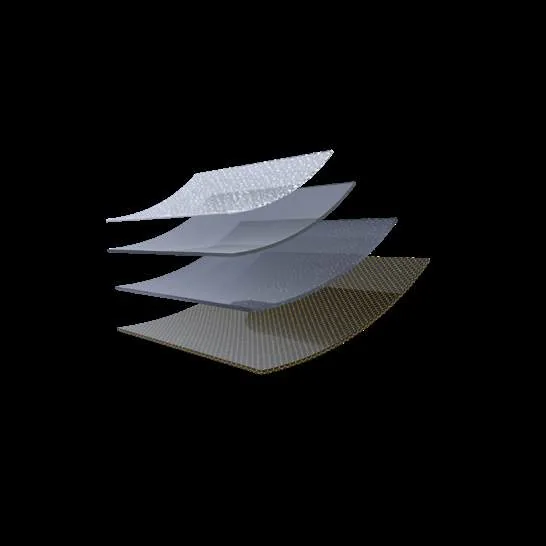
The top layer of a quality protection film is made of an elastomeric polymer with what is called shape memory. On our Ace films it's a 15 µm layer over a 150 µm TPU carrier and 25 µm adhesive. When a shallow scratch forms, only this elastic layer deforms, not the paint beneath it. When energy is supplied as heat — from the sun, hot water or a heat gun — the polymer chains return to their original arrangement and the surface visually smooths out.
It's important to understand the limits of the technology and to set the customer's expectations. Self-healing addresses fine surface scratches, swirl marks from improper washing and minor scuffs. It cannot repair a deep cut that penetrates the full thickness of the film down to the paint. That's why mechanical toughness and the ability to absorb impact remain just as important as self-healing.
Healing speed depends on temperature. On a warm sunny day it happens within tens of minutes; in the cold it can be sped up with hot water or a heat gun. A quality film keeps this ability throughout its lifespan, while cheaper materials gradually lose it as the top layer ages and hardens — one of the points to prove out by test when choosing a roll.
For the applicator this means fewer complaints about fine wash marks and a clear selling point. Minor scuffs are not permanent, and the surface keeps a deep gloss without polishing. Combined with a hydrophobic finish, a self-healing film reduces the time and cost of caring for the paint — exactly what the customer appreciates when you demonstrate it at handover.